PH: (02) 9890 1766
info@dhporter.com.auYou can’t see a pitch error by eye. Two blades can look identical and still differ enough to cause vibration and cost you speed, and the only way to know for sure is to measure them. That’s why measurement sits at the heart of all our propeller work.
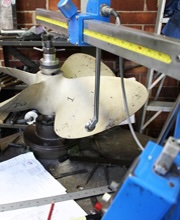
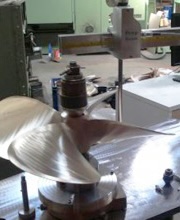
At DH Porter, we use licensed Prop Scan equipment, running the latest E4 software, to measure propellers up to about 50” in diameter.
Prop Scan measures every blade and compares each one with the others, and with the design:
We check the results against ISO 484-2, the international standard for propeller manufacturing tolerances. That tells us which class your propeller is in and exactly where it falls short, so the work goes precisely where it’s needed.
We use Prop Scan right through our propeller work:
Prop Scan reports are available on request. They’re most often asked for by commercial operators with vessels in survey, but if you’d like one for your propeller, just let us know.
To book a propeller in for measurement, or to talk about what Prop Scan can tell you, ring the workshop on (02) 9890 1766.