PH: (02) 9890 1766
info@dhporter.com.au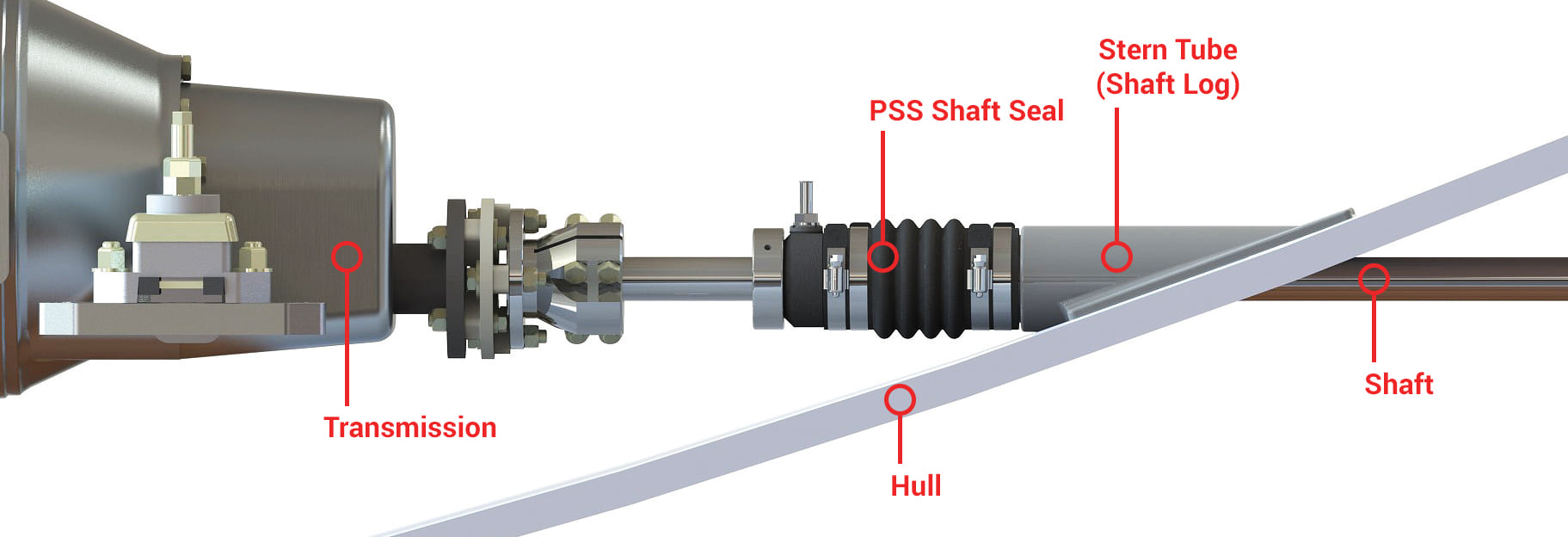
Every shaft that leaves a hull has to be sealed against the sea. DH Porter supplies both approaches: traditional packed and oil-sealed glands, machined in our North Parramatta workshop, and the PSS mechanical face seal for owners who want a dry bilge and no routine adjustment.
Which one suits a vessel depends on the shaft, the stern tube arrangement and how the boat is used. We are happy to talk it through before you commit.
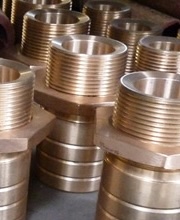
Manufactured in-house, to your dimensions or from an existing sample. This is the right answer for a great many boats, and the only answer where a stern tube arrangement has to be made from scratch or matched to legacy hardware.
All are cut from marine-grade bronze or stainless as the application requires, and can be supplied as a complete assembly with shafting and couplings.
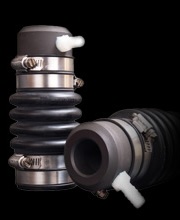
We are the NSW stocking distributor for the PSS (Packless Sealing System) shaft seal, a mechanical face seal that replaces the stuffing box entirely and, once set up, needs no packing, no adjustment and no drip.
The seal is made between two flat faces: a rotating stainless steel collar fixed to the shaft, and a stationary carbon flange carried on a rubber bellows.
The bellows attaches to the stern tube with hose clamps (specify your stern tube diameter when ordering), and the carbon flange clamps to the front of the bellows. The stainless collar fits on the shaft ahead of the flange and is used to compress the bellows before being locked to the shaft with set screws. That compression is the pre-load, and it is what keeps the two faces in contact and lets the seal absorb thrust from the propeller.
The carbon flange is bored larger than the shaft, so it floats around it rather than gripping it. That is what allows the seal to accommodate most misalignment and vibration without leaking or wearing the shaft.
The collar is sealed to the shaft by two O-rings recessed into its bore. Those O-rings turn with the shaft and the collar, so they see no relative movement and no wear in normal operation.
The manufacturer’s brochure covers the full size range, dimensions, materials and part numbers.
Download the PSS Shaft Seal brochure (PDF, 2.9 MB)
We hold common sizes in stock and can order the rest. Ring the workshop on (02) 9890 1766 with your shaft diameter and stern tube diameter and we will confirm the right seal and what we have on the shelf.